Will Sarcasm Trump Pain Again?

Comments on the Republican National Convention and Sarah Palin's speech.

Joe Klein, Time blog:

Palin's was an authentic, sarcastic, white working-class voice--absent the economic pain at large in the country, the fact that median families have lost $2000 in disposable income during the Bush presidency. The Democrats are betting that the pain will trump the sarcasm this year; the media reaction you're seeing, including my own, comes from the knowledge that sarcasm has trumped pain so often in recent history.

Matt Stoller, Open Left:

I'm watching the Republican line-up, just getting done with Giuliani, and what strikes me is the utter sense of hatred and contempt for ordinary people emanating from this Christian white group.

Steve Clemons says that Palin added some sizzle to the convention, and I'm sure that's right. When I left, this was a deadened and frustrated group. But now I see on TV an air chopping Giuliani dripping with hatred in a symbiotic relationship with a lustful and excited crowd. This hatred, this anger, this rage is what they love. This is who they are.

This party is aroused by a raw primal screeching bitterness. I don't know if independents see Rudy's prime time speech like I see it, but what I see is a vicious white mob who laugh and sneer at people losing their homes in the name of small town American values and who hate community organizers [such as ACORN] standing up for those people.

tremayne, Open Left:

For this campaign, [McCain campaign manager Rick] Davis says the McCain strategy is to avoid the issues because:

"This election is about a composite view of what people take away from these candidates."

What comprises that composite view? Part of it must be babies. Yes, this year they will be wrapping themselves not only in flags but in babies. This is an astute political move I suppose: who opposes cute little babies? And so we got shot after shot tonight of the Palin's newest addition being held by, I think, every family member at one point or another. I think the strategy is something like: I dare you NOT to vote for this baby.

Besides the baby there was also an appeal to Bubba. Not Bill in particular but any and all voters who consider themselves "regular" and "hard working" and from either a small town or a narrow perspective. In this Palin certainly succeeded in firing up the base. And so the McCain campaign has shifted from one targeting the maverick middle to a Rove-style approach of motivating the right and demonizing your opponent.

One could have a wide perspective and be from a small town but Palin's appeal is to those bitter people Stoller talks about who don't understand their problems are a consequence of modernity (including corporate outsourcing and streamlining) and therefore find a scapegoat in "liberal elites" who look funny and use them big words.
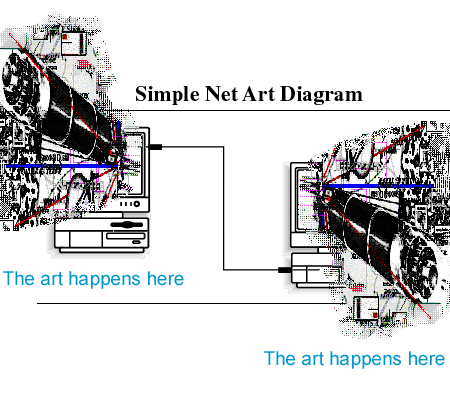
Text in Art: An Interlineated Press Release

More Than Words
Opening: Thursday, September 4, 6 - 8PM
Von Lintel Gallery
555 West 25th Street
September 4 - October 11, 2008

Text is everywhere, bombarding us daily without our having to open a book
or power-up a computer. Newspaper headlines greet us on our way to work;
billboards hover; text messages stream through space and tickers run
across screens,

poisoning the cognitive environment with brain-damaging information glut

measuring the pulse of our world. Text also plays a
ubiquitous role in contemporary art. Von Lintel Gallery is pleased to
present More Than Words, an exhibition of work by artists who

seek to withdraw from the infoglut spectacle into a world of jouissant, unsullied image and sound

are drawn to
text as subject and which explores the challenges they face incorporating
it into their chosen medium.

Biologist E. O Wilson theorizes that the symbols of all languages are
intrinsically pleasing to the eye, albeit in very different ways. That
notion is certainly

disproven by bad corporate logos and ubiquitous use of fonts such as "Comic Sans"

borne out by the long, rich history--from hieroglyphs
to corporate logos, from illuminated manuscripts to graffiti--of the
intertwining of these two very different modes of visual expression, image
and text.

Inevitably, when we encounter text in art we

walk on to the next piece

first “read” its literal
meaning. But the absorption of linguistic signs into this new formal
structure decontextualizes them, freeing them from their normal
significance. Letters, words and phrases take on new and unexpected
metaphoric roles as they are subsumed within the form inherent to a
particular work of art. It is this expanded capacity for meaning that
makes text in art more than just words.

Selected participating artists: Carl Andre, Fiona Banner, Nayland Blake,
Michael Cooper, Lesley Dill, Stephen Ellis, Lee Etheredge IV, Graham
Gillmore, Guy Goodwin, Shirazeh Houshiary, Robert Indiana, Ellen Kahn,
Joyce Kim, Lawrence Lee, Glenn Ligon, Mark Lombardi, Suzanne McClelland,
Bruce Nauman, Aaron Parazette, Richard Prince, Nicolas Rule, Ed Ruscha,
John Walker, Michael Waugh.

Evangelion and Budgets

The House Next Door on the '90s anime series Neon Genesis Evangelion:

As Wikipedia reports, GAINAX was, at the time, not a wealthy production studio. Evangelion was begun after a film project was dropped due to lack of money and the studio was dropping various parts of their business to stay afloat. The complicated mech designs of the Eva series were originally deemed to be too complicated for merchandising, the accompanying manga was initially viewed poorly, and funding sources pulled out one after another while the series aired. As the show became too expensive to animate from episode to episode, more and more earlier footage was re-used. This should have been a disastrous choice, but the way the re-used footage was incorporated into the internal struggle episodes is a large part of what has made Evangelion so memorable.

For what it's worth this blog assumed back in the day that the long pregnant pauses between tortured, painfully communicating characters were completely intentional.

Lansky: Goodbye to Iron

Computer music composer and trailblazer Paul Lansky has given up making electronic music to concentrate on scores for live musicians, per the Times. His acoustic music (such as the Coplandesque "Odd Moments") is superb so this bodes well.

We probably could have done without the digs at his former field in the article ("I basically don’t like electronic music. I like to compose it. I’m just not a big fan of it" and "His conversion, in a sense, is a relinquishing of the need to control, the rejection of what he called an antisocial bent") but there's no denying this part:

In some ways Mr. Lansky’s shift is emblematic of the field’s disintegration, at least from the way it was constructed even a decade ago.

In the early years of making music with computers, it could take days to produce a few measures of music. Composers went to universities and congregated around giant multimillion-dollar mainframes — "big iron" — to create pieces. Mr. Lansky used punch cards to make his first electronic piece, "mild und leise," in 1973. "It was tedious, backbreaking work," he said.

Now a tiny laptop dwarfs the creative power of those behemoths. Electronic composition has left the laboratory. Any Mac user can compose, and much of music making is shot through with digitization. Composers commonly write with computer programs. Electronic music trends now lie in interactive computer programs that create sounds together with live performers or electronically alter acoustic instruments.

Again, all that's true but hardly a reason for quitting. ("Waaah, it's just not backbreaking any more.") The use of "any Mac user" as a synonym for "the boob in the street" is mightily amusing, however.