press release annotated

Michael Elmgreen and Ingar Dragset pursue [1] a conscious [2] cultural position [3] that abstracts from [4] issues of power [5], sex [6], and marginalized or subcultural [7] behavioral patterns [8] in an alignment with [9] architectonics [10] and style [11] — as ways of emphasizing the "private" [12] as a reflection of the particular, singular, and non-generic [13] in exploring [14] social subject matters of class [15], privilege [16], gender [17], and nationality [18]. Artforum critic Molly Nesbit joins the artists Elmgreen & Dragset in this first time public presentation in New York City approaching [19] their practice [20] and production [21], as well as their role [22] as theatre directors [23], assemblers [24], and editors [25].

[1] as opposed to achieve
[2] as opposed to working while asleep
[3] as opposed to a subcultural position
[4] redacts
[5] as opposed to actual power
[6] as opposed to actual sex
[7] either or both, they can't decide
[8] as opposed to actual behavior
[9] as opposed to being out of kilter with
[10] the most special kind of architecture
[11] to spice up the architectonics
[12] as opposed to the "public"
[13] not to mention the unitary, unique, and one of a kind
[14] as opposed to finding
[15] as opposed to privilege
[16] as opposed to class
[17] as opposed to sex
[18] the last but not the least of the four subject matters
[19] but never reaching
[20] as opposed to perfection
[21] as opposed to work
[22] or roles
[23] to be explained later
[24] factory workers
[25] of press releases
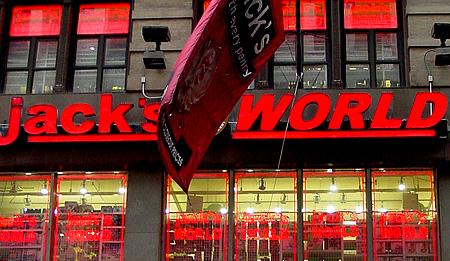
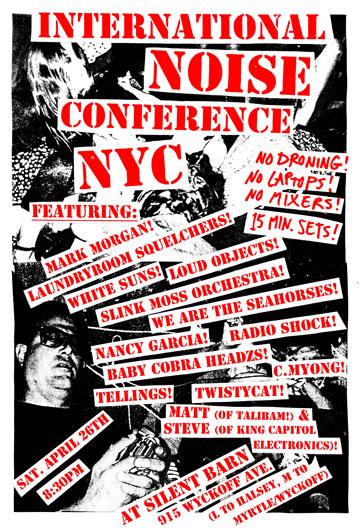
non-hierarchical vs leveling

Excerpt of conversation from Paddy Johnson's blog. The topic is surf clubs where artists appropriate/highlight/alter Internet content and what the nature of that activity is. Slight editorial tweaks were made for clarity, grammar.

Kevin // 21 Apr 2008, 3:35 am:

Sites like 4chan and lolcats are businesses. They make no claims to contain profound content — hits are their sole purpose. Somethingawful.com for example, is covered in ads. Contributors make posts like this one (directly quoted):

“Since Grand Theft Auto IV is a hot topic at the moment and by writing about it we’ll get more hits and ad revenue as people search for the latest information about the game on Google, in today’s article…”

Of course the purpose of these sites is to be “a barometer of future trends” because they live by the success and expansion of their market. They treat the web like an object, trading it like iron and corn.

An art website, by contrast, is a gift. An art website is made outside of a market, regardless of trends. It is made at a loss. Instead of connecting users with other users, an art website can connect us with a profound experience.

I agree with [Paddy's] statement “I don’t wholly subscribe to the line of thought that there is no hierarchy on the web.” You have described John Michael’s piece, for example, as “elegant” therefore placing higher value in it. Online art will not be able to contribute much to the larger cultural conversation until we are able to admit that there is a hierarchy on the web — that there are profound experiences to be had online, and that a criteria can be developed to separate the saccharine billboards from the truly beautiful and nourishing work.

tom moody // 21 Apr 2008, 8:28 am:

In defense of 4Chan I have d/led many GIFs from there that I consider startling, if not profound. I don’t often use them because I consider them too “previously authored” or branded. The site has a certain creative anarchy reminiscent of the Church of the Subgenius’ “Bob” graphics in the Church’s heyday.
The web has a leveling effect–it is all the same medium coming through our entrancing little TV screens, so artists and consumers alike can be forgiven for not differentiating a gift from someone’s job.
That said, I still like the old idea of the potlatch or gift economy existing in tandem with all the commercial insanity.

PS I prefer “leveling” to “flattening” after Thomas Friedman stunk up the joint with his Flat Earth theory.

Art Fag City // 21 Apr 2008, 9:09 am:

Well not everything comes in at the same level — I think everything on those sites [4Chan, etc] appears at the same level which is different. It’s like going to a yard sale - some people love sorting through the junk for the good stuff, others don’t find it so interesting and prefer more presorting to have been done.

I’m uncomfortable saying that everything we see is leveled because so many of the web tools we have seem to have been made in an effort to help users create hierarchy. The fundamental difference here from traditional media seems primarily in the search functions themselves, which keep the hierarchy defined by the user. One of the concerns this panel discussed was the need to keep as much of this ability in our own hands. It seems to me that this is particularly important to artists who don’t need someone sorting through material for them first to tell them whether it’s worth their time.

Kevin // 21 Apr 2008, 1:30 pm:

[Re:] Tom’s defense of 4Chan — by saving some gifs from 4Chan and not others, you admit that the web has a definite hierarchy by admitting that some gifs are better than others. Using the same raw gif material, certain authors have subtly constructed a more “startling” work to your taste, thereby bringing an area of potency to the web (a hierarchy, the opposite of leveling).

Physical artworks are also all constructed of the same medium — molecules. Just because all physical artworks are constructed of molecules does not mean that all physical artworks are leveled. Some artists arrange molecules better than others. Some net artists arrange non-physical information better than others.

The web is like a desert. The peaks and valleys of quality are not very apparent. From a distance the desert seems flat, but it is actually this vast low frequency wave of mediocrity. The slightest rustle in the wave is what we have to watch for carefully if we want to have those profound experiences.

tom moody // 21 Apr 2008, 2:31 pm:

Re: hierarchies–-as Paddy suggests, anything with a registration requirement automatically creates insiders and outsiders. Even in potlatch economies some people have more to give away.

By “leveling” I was talking about the medium-–how everything from a tinkertoy construction to the Sistine ceiling becomes a 72 dpi image on your browser.

Not saying rustles in waves can’t be detected in this arena, only that it’s hard and people need a better idea of how to go about it.

This is where the [photo of a giant cell phone smashing into a car] is a good example:
Did the artist get punked by a corporation? Is he punking us? Does the photo need some additional level of transformation to be art? Is the surf club the same as a white cube frame so that even corporate crap becomes art? Does everything on such a site have to be art? Does it have to be good art? Should one always be able to differentiate between good, crap, and work in process? etc

Art fair or comic con?

Related, Damon's comment on his posting of the cell phone photo on Nasty Nets. I had asked elsewhere "whether a photo of a giant cell phone smashing into a car was (a) art or (b) good art." Damon said:

To be more specific: it was whether or not a staged photograph of a giant cellphone smashing into a car masquerading as a amateur photo of a “natural event” but functioning as a viral advertisement (and maybe hence “insult to injury”) was (a) art or (b) good art.

I’d be reluctant to pick either choice.. but I think Joel’s notion of “watered-down content” is something worth more consideration…

Artists vs Lolcat-makers

Bennett Williamson of the Double Happiness blog, commenting at Paddy's:

I think that non-artist online groups like 4chan and other lulz/meme related outfits also generate and popularize a lot of the content that later become more general cultural memes (generally jokes, as opposed to more ‘artistic’ content).
Web art actions (ranging in form from making posts to the techniques used to cull materials) often subvert standard web use practices, sometimes doing things ‘wrong,’ taking the long way around, noticing patterns, using online tools for non-functional ends, and getting caught up on aesthetic/presentation in places where information is supposed to be paramount.
In terms of a Future for the Internet, I wonder if online art will follow the path of the meme and be able to bring its ideas into a larger artistic/cultural conversation about media (I hope so) without getting lumped in with the expectation that ideas and culture that start on the internet have to be for entertainment or be funny (I hope not.)

Thanks, that responds to:

1. Issues in the Nasty Nets Halloween thread that were never fully discussed because people were fighting.
2. Some issues posed on Rhizome* to Marisa Olson and other surf bloggers.
3. This post about the differences between the surf blogs and B3TA, 4Chan, ebaum's world, or somethingawful.com.

*Update, 2011: The Rhizome link has been changed to http://rhizome.org/editorial/2008/apr/9/let-it-spin/