Infinite Fill, Komputer Kraft Update

Arend deGruyter-Helfer 1

Arend deGruyter-Helfer 2

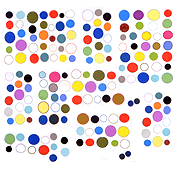
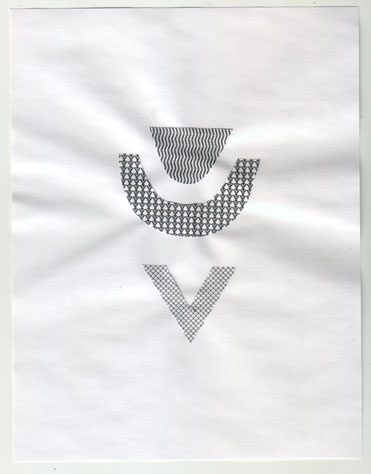
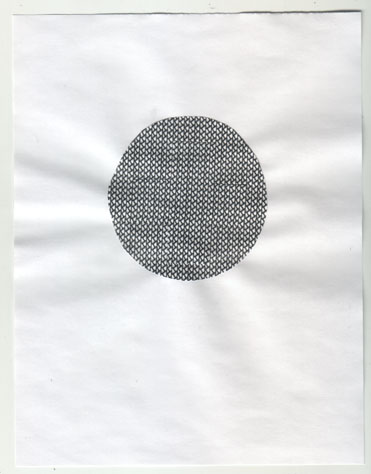
Seeing this work by Arend deGruyter-Helfer made me nostalgic for the "infinite fill" show, a New York moment that came and passed in 2004. A fair amount of energy crackled around that show [photos] [writing].
Then "the gallery didn't sell a single piece," word had it.
And that was it.
The current "slacker" shows in the museums (or whatever they're supposed to be) do not reflect Komputer Kraft--hybrids of the handmade and lo fi digital, which some artists are more committed to than others. The only work that comes close are the Lialina and Slocum* pieces linkable at the New Museum. It's a shame, I think it's still interesting.

*Update, 2011: The link to Paul Slocum's Unmonumental project has been changed to http://archive.rhizome.org:8080/exhibition/montage/14_slocum.php

Whitney Biennial 2008

As artists we go to shows for a sense of the zeitgeist and things we can use (ideas, materials). There is little here in either case.

The most exciting things happening today are (i) online, and (ii) with how artists are navigating the space between the web, home computers, and "real space." These topics are barely addressed in the show.

Although not in the above categories, the best work is by a deceased artist, Jason Rhoades. It is the disordered double to the Phoebe Washburn installation (plants growing in Gatorade), which was calm and formally pleasing but could have been less sprawling. With Rhoades the sprawl is the point--like Cady Noland in its damaged nihilism, except funny.

1 in 100 U.S. Adults Behind Bars

The American gulag. This is so shameful. Fortunately McCain, Obama, and the Clintons have all pledged to cut these numbers in half. Not.

1 in 100 U.S. Adults Behind Bars, New Study Says
By ADAM LIPTAK, NYT
Published: February 28, 2008

For the first time in the nation’s history, more than one in 100 American adults is behind bars, according to a new report.

Nationwide, the prison population grew by 25,000 last year, bringing it to almost 1.6 million. Another 723,000 people are in local jails. The number of American adults is about 230 million, meaning that one in every 99.1 adults is behind bars.

Incarceration rates are even higher for some groups. One in 36 Hispanic adults is behind bars, based on Justice Department figures for 2006. One in 15 black adults is, too, as is one in nine black men between the ages of 20 and 34.

The report, from the Pew Center on the States, also found that only one in 355 white women between the ages of 35 and 39 are behind bars but that one in 100 black women are.

The report’s methodology differed from that used by the Justice Department, which calculates the incarceration rate by using the total population rather than the adult population as the denominator. Using the department’s methodology, about one in 130 Americans is behind bars.

Update: What's even more scandalous is these concentration camps are increasingly being privatized. Read here about the appalling medical conditions of prisoners left untreated by these beneficiaries of the "free market."

Squaresville

Adam Rogers, a senior editor at Wired, editorializing in the New York Times:

The most popular TV shows [today] look like elaborate role-playing games: intricate, hidden-clue-laden science fiction stories connected to impossibly mathematical games that live both online and in the real world. And you, the viewer, can play only if you’ve sufficiently mastered your home-entertainment command center so that it can download a snippet of audio to your iPhone, process it backward with beluga whale harmonic sequences and then podcast the results to the members of your Yahoo group.

This extended product placement disguised as an obit for Dungeons & Dragon co-creator Gary Gygax is supposed to make geeks sound cool but makes me want to learn acoustic guitar and live in a yurt.